Dental
Dental Implant Procedure Step by Step: Stages, Healing and Risks
Dental implant procedure step by step: assessment, bone grafting, placement, healing time, the crown, recovery, risks and who needs extra care.
In this article
- Quick Answer: Dental Implant Procedure at a Glance
- What are the steps of the dental implant procedure?
- How long does the dental implant process take?
- Is a bone graft always needed?
- What anaesthesia is used and what is recovery like?
- What are the risks of a dental implant?
- Who needs extra care before a dental implant?
- How successful are dental implants?
- How does Medilife Wellness Clinic plan a dental implant?
- Frequently Asked Questions
- Sources
By Medilife Wellness Clinic. Medically reviewed by Dr Farzana Raheema, Dentist, DHA licence 81020897-001
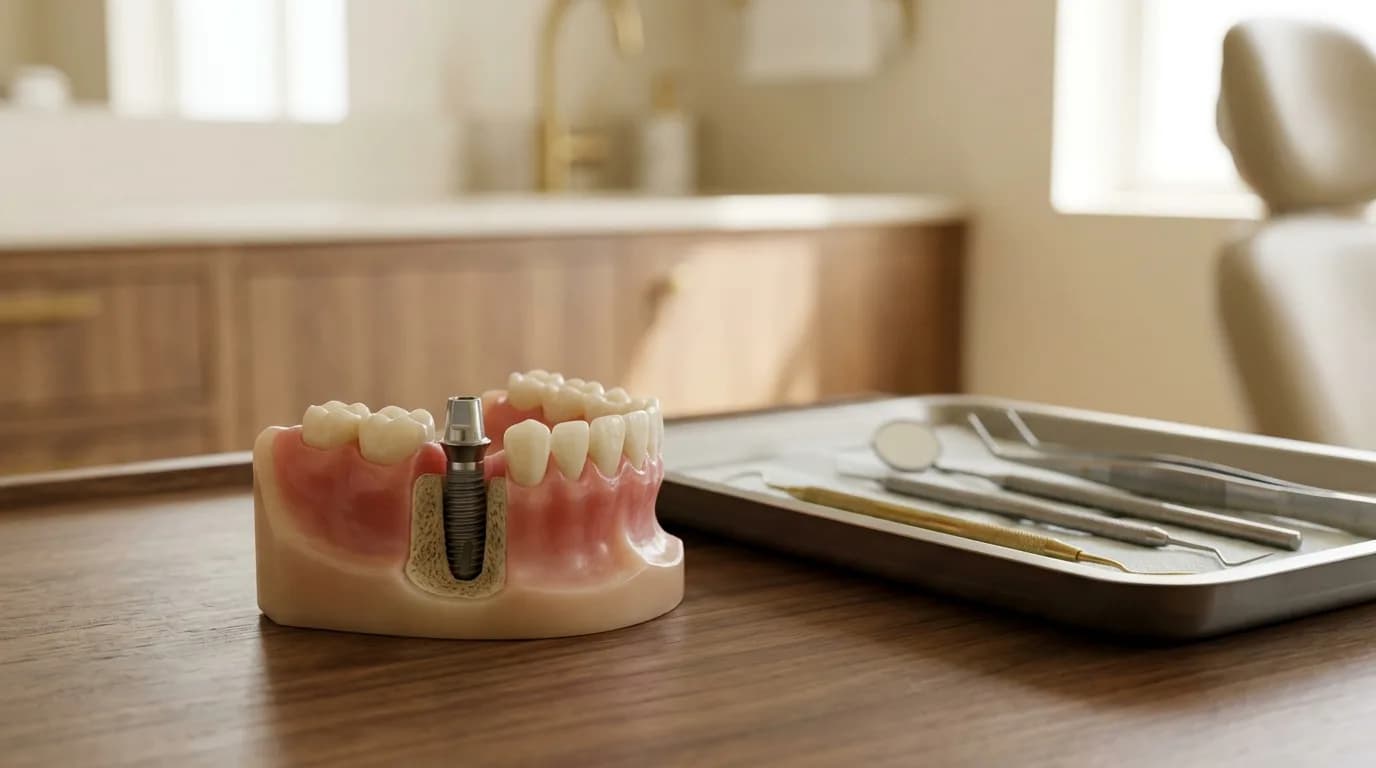
A dental implant is placed in stages over several months, and most of that time is healing. Mayo Clinic lists the steps as removing a damaged tooth, bone grafting if needed, placing the implant, healing, placing the abutment and placing the artificial tooth. A hospital trust page from Guy's and St Thomas' NHS Foundation Trust says to wait at least 3 months after placement before the implant supports a tooth.
Quick Answer: Dental Implant Procedure at a Glance
- Steps: assessment and X-rays, tooth removal if needed, bone graft if needed, implant placement, healing, abutment, then the crown, says Mayo Clinic.
- Healing: at least 3 months after placement, and a bone graft can add 4 to 6 months, says Guy's and St Thomas'.
- Anaesthesia: local anaesthetic injection, says Guy's and St Thomas'. Mayo Clinic adds that sedation or general anaesthesia may be chosen.
- Risks: infection, damage to nearby teeth or blood vessels, nerve damage and sinus problems, says Mayo Clinic.
- Extra care: smoking, uncontrolled diabetes, gum disease history and some medicines, says a 2024 literature review.
What are the steps of the dental implant procedure?
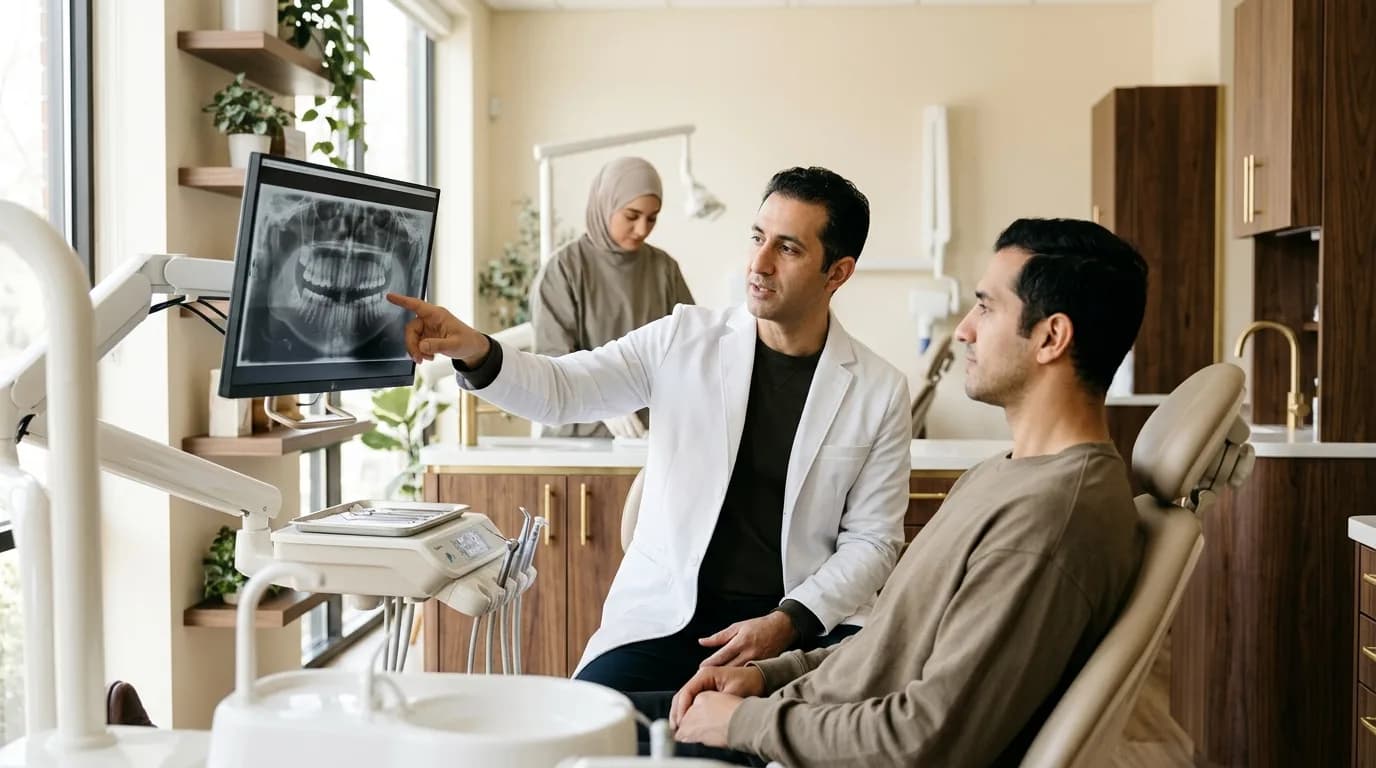
The procedure has about six stages, from assessment to the final crown. Guy's and St Thomas' describes an assessment with X-rays and impressions, bone grafting if the jaw lacks bone, then implant placement, where the gum is lifted, the bone is drilled, the implant is placed and the gum is stitched. Mayo Clinic lists the same sequence and adds removing a damaged tooth first. After healing, the abutment (the connector) is placed, and then the artificial tooth, which Guy's and St Thomas' describes as a crown, bridge or denture, is fitted over several restorative appointments. Mayo Clinic says gums need at least 2 weeks to heal after the abutment before the crown goes on.
How long does the dental implant process take?
Mayo Clinic says the whole process can take many months, mostly for healing. Guy's and St Thomas' says to wait at least 3 months after placement before the implant supports teeth, and that a bone graft can add 4 to 6 months. Some implants are buried and need a second small procedure before use. The American Academy of Implant Dentistry says the timeline varies from as short as a few months to more than a year in complex cases. A 2025 case series from five private clinics reported an average of 3.38 months from surgery to loading, with a range from immediate loading to 22 months. Timelines differ by case, so the dentist gives yours after the assessment.
Is a bone graft always needed?
No. A bone graft is needed only when the jaw lacks enough bone. Guy's and St Thomas' says grafting is done when the jaw does not have enough bone, and some implants need minor grafting during placement. Mayo Clinic lists bone grafting as a step taken only when needed. The assessment with X-rays shows whether you need one.
What anaesthesia is used and what is recovery like?
Local anaesthetic is used, and recovery is usually as an outpatient. Guy's and St Thomas' says the implant is placed under local anaesthetic injections, and stitches are removed about a week after surgery. Mayo Clinic says the choice can also include sedation or general anaesthesia, decided with the specialist, and you may need to fast and arrange a lift home. Mayo Clinic lists swelling, bruising, pain at the site and minor bleeding, soft foods and stitches that usually dissolve. Contact the dentist when symptoms get worse.
What are the risks of a dental implant?
The main risks are infection, damage to nearby structures, nerve damage and sinus problems. Mayo Clinic lists infection at the site, damage to surrounding teeth or blood vessels, nerve damage causing pain, numbness or tingling, and sinus problems with upper jaw implants. Mayo Clinic says an implant fails when the bone does not fuse adequately, and that placing a new one after failure takes about 3 months. A 2024 review calls peri-implantitis (infection and bone loss around the implant) the leading cause of implant failure.
Who needs extra care before a dental implant?
People who smoke, have uncontrolled diabetes, a history of gum disease or take certain medicines need extra care. Mayo Clinic says smoking may contribute to failure. A 2024 narrative review says uncontrolled diabetes carries higher risk, while well-controlled diabetes shows success similar to people without it, and that a history of periodontitis raises the risk of peri-implantitis. The same review reports lower implant survival in people taking some medicines, such as anti-resorptive drugs (89.83% against 96.03% in non-users) and some antidepressants, and mixed evidence for bisphosphonates. The authors say the evidence is limited and inconsistent. The dentist needs a full list of your medicines and conditions. Do not stop any medicine without your doctor's advice.
How successful are dental implants?
Mayo Clinic says most implants are successful, and published figures vary by study. A 2025 case series of 339 patients and 651 implants in five private clinics, with an average follow-up of about 46 months, reported 99.9% survival. That is one clinic group and it should not be read as typical. The 2024 review quotes survival rates from 89% to 100% across different patient groups. In the case series, immediate placement showed more bone loss than delayed placement, and people with a history of gum disease lost more bone.
How does Medilife Wellness Clinic plan a dental implant?
At Medilife Wellness Clinic in XL Tower, Business Bay, a dentist examines your teeth, gums and bone, reviews your medical history and medicines, and explains each stage and the timeline before any treatment. The clinic is open 24 hours a day, 7 days a week. For treatment details, see Dental Implants in Dubai.
Frequently Asked Questions
Is the dental implant procedure painful?
Guy's and St Thomas' says a local anaesthetic is used. Mayo Clinic says pain, swelling and bruising at the site can follow, and the dentist advises on pain relief.
Can an implant be placed on the day a tooth is removed?
Mayo Clinic describes removal of a damaged tooth as the first step. In the 2025 case series, immediate placement showed more bone loss than delayed placement, so the dentist decides after the assessment.
Does the crown go on straight after the implant?
Not usually. Guy's and St Thomas' says to wait at least 3 months after placement before the implant supports teeth, and the 2025 case series included some implants loaded on the day of surgery.
Sources
- Mayo Clinic. Dental implant surgery, About (23 October 2024). https://www.mayoclinic.org/tests-procedures/dental-implant-surgery/about/pac-20384622
- Guy's and St Thomas' NHS Foundation Trust. Dental implants: Having a dental implant (last reviewed December 2024). https://guysandstthomas.nhs.uk/health-information/dental-implants/having-dental-implant
- American Academy of Implant Dentistry. What are Dental Implants? (no date shown). https://www.aaid-implant.org/dental-implants/
- Samara W, Moztarzadeh O, Hauer L, Babuska V. Dental Implant Placement in Medically Compromised Patients: A Literature Review. Cureus 2024;16(2):e54199. https://pmc.ncbi.nlm.nih.gov/articles/PMC10942790
- Goker F et al. Outcomes of Dental Implants in Routine Clinical Practice: A Retrospective Multicenter Study. International Journal of Dentistry, published 23 February 2025. https://pmc.ncbi.nlm.nih.gov/articles/PMC11872292/