Exosome Hair Treatment
in Dubai
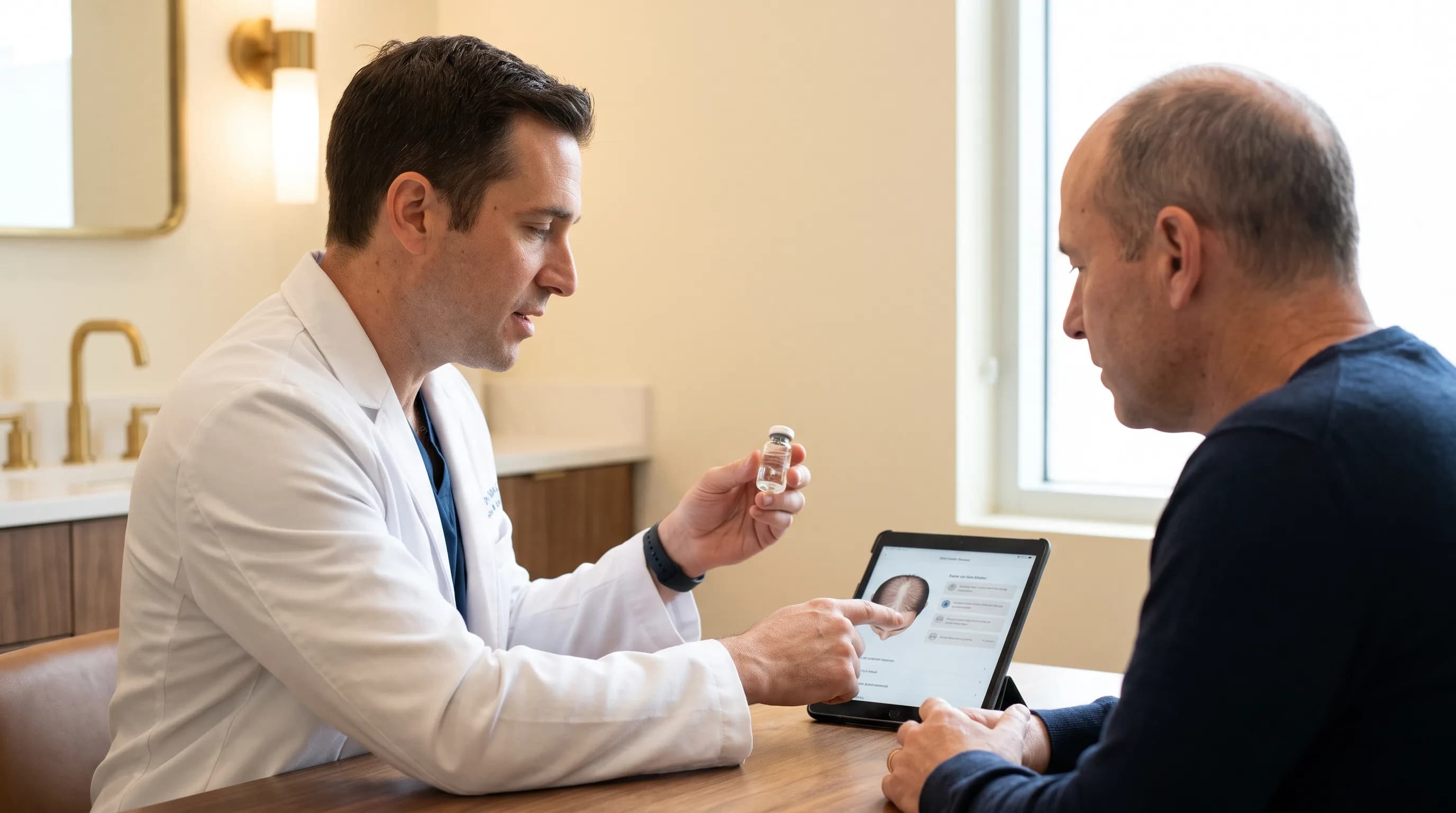
Exosome hair treatment is a newer regenerative option for thinning hair, in which exosomes, tiny particles that cells use to send signals to each other, are used on the scalp to support hair follicles. At Medilife Wellness Clinic in XL Tower, Business Bay, a doctor first looks for the cause of your hair loss, then explains what is known and not known about exosomes before you decide. Price guide: from about AED 2,000 per session. Results vary from person to person.Quick Answer
Exosomes are very small particles released by cells. In hair care, exosome products are prepared in a laboratory and used on the scalp, often together with microneedling, with the aim of supporting follicle repair and hair density. The research is early: a 2026 literature review in JPRAS Open describes the clinical data as limited, preliminary and heterogeneous, and calls for adequately powered multicentre randomised trials. The US Food and Drug Administration states that it has not approved any exosome product, and exosome products differ in source and quality, so the product used matters. Price guide: from about AED 2,000 per session. These prices are a guide to what treatment usually costs in Dubai. Medilife Wellness Clinic prices depend on your treatment plan; send us a WhatsApp message for current prices.
What are exosomes and how are they used for hair?
Exosomes are tiny particles, released by cells, that carry proteins and other molecules and help cells communicate with each other. Exosome products for hair are made from cells in a laboratory. The particles are collected, purified and put into a solution that is used on the scalp.
The JPRAS Open review on exosomes in trichology, the study of hair and scalp, lists the sources used in research. These include exosomes from mesenchymal stem cells, adipose (fat) stem cells, dermal papilla cells, which sit at the base of the hair follicle, and plant-derived sources. Different products behave differently, and there is no single standard product.
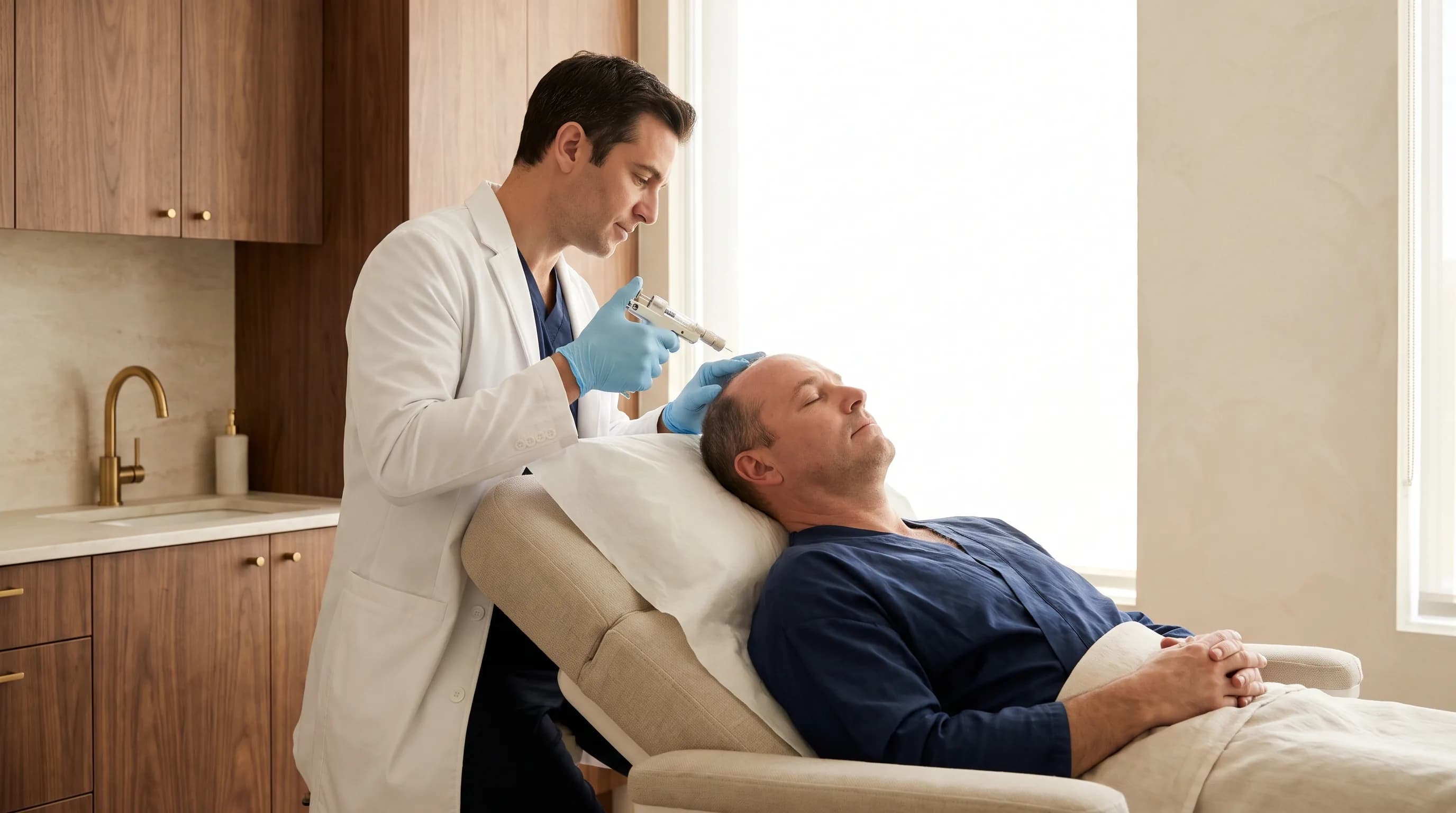
Delivery also differs. The review illustrates a method in which the exosome solution is applied to the scalp and then followed by microneedling, with sessions three weeks apart. Other clinics use other routes, and your doctor explains the method used at Medilife Wellness Clinic before treatment begins.
Exosome treatment is not a hair transplant. Medilife Wellness Clinic offers non-surgical hair care only. The treatment is a supportive option that may help some people with thinning hair, alongside treatment of the underlying cause.
What does the research say about exosomes for hair loss?
The research is early, and clear information matters in a health topic.
The 2026 review in JPRAS Open, which classified studies by the Oxford evidence hierarchy, describes the clinical data on exosomes for hair as limited but promising. It reports improvements in hair density, thickness and follicular health in some of the work it covers, and it states that minimal adverse effects were reported in systematic reviews and case series. It also describes the clinical data as preliminary and heterogeneous, meaning the studies differ widely in design, product and method.
The same review states what is needed next: adequately powered, multicentre randomised trials with standardised outcomes, and harmonised manufacturing and regulatory frameworks, including GMP-compliant production and batch-level quality control. GMP stands for good manufacturing practice, a set of rules for making products consistently and safely.
What this means for you in practice:
- Exosome treatment may help some people, and the evidence is not strong enough to say it helps everyone.
- Many studies combine exosomes with microneedling, so it is hard to know how much of a result comes from the exosomes themselves.
- Products differ in source, purity and dose, so a result from one product cannot simply be applied to another.
- Results vary from person to person, and no outcome can be promised.
What is the regulatory status of exosome products?
The US Food and Drug Administration published a Public Safety Notification on Exosome Products on 6 December 2019. It states that the agency has not approved any exosome product. It reports serious adverse events in patients who were treated with unapproved products marketed as containing exosomes, and it states that exosomes used to treat diseases in humans are regulated as drugs and biological products that are subject to premarket review. It advises patients to ask whether the treatment has been reviewed by the FDA.
The FDA is a United States regulator, so the rules that apply in Dubai are the local ones. For this reason, the doctor at Medilife Wellness Clinic tells you the product name, where it comes from and its registration details before treatment. Ask for this at any clinic. Details that cannot be shown are a reason to wait.
Who may be suitable for exosome hair treatment?
Exosome treatment is usually discussed for people with active hair follicles who want a non-surgical option and understand that the evidence is early. Your doctor may discuss it if you have:
- Early or moderate pattern hair loss, in men or women.
- Thinning that continues after the cause has been checked and treated.
- A wish to combine a scalp treatment with other hair care in a single plan.
It is less likely to help in areas that have been bald for many years, where follicles may no longer be active. Hair loss also comes from thyroid conditions, low iron, low vitamin D, hormones, stress, some medicines and scalp conditions. A scalp examination and, where needed, blood tests come first.
Who should not have exosome hair treatment, or should wait?
Your doctor decides after taking your history. Treatment may be delayed or avoided in these situations:
- An active infection, rash, wound or inflammatory condition on the scalp.
- A bleeding disorder, or treatment with blood-thinning medicines.
- Known allergy to any ingredient in the product.
- A weakened immune system, or an autoimmune condition that is not controlled.
- Pregnancy or breastfeeding. Tell the doctor first, and the doctor advises on the safest option.
This list is not complete. Tell the clinic about all your medicines, supplements and allergies at your consultation.
What should I ask before having exosome treatment?
Exosome products differ a great deal, so ask these questions at any clinic before you book.
- Which product and brand is used, and can you see the box or the label?
- Where do the exosomes come from, for example human cells or a plant source?
- Is the product registered or allowed for use in the UAE, and can the clinic show this?
- How is it used: on the scalp after microneedling, or by injection? The route affects the risks.
- Who performs the treatment, and under which doctor?
- What does the price include, and how many sessions does it cover?
A very low price can mean a very small amount of product, or a product that is not clearly identified.
What happens during an exosome hair treatment session?
The steps below describe a typical session. The doctor explains the exact process used at the clinic when you attend.
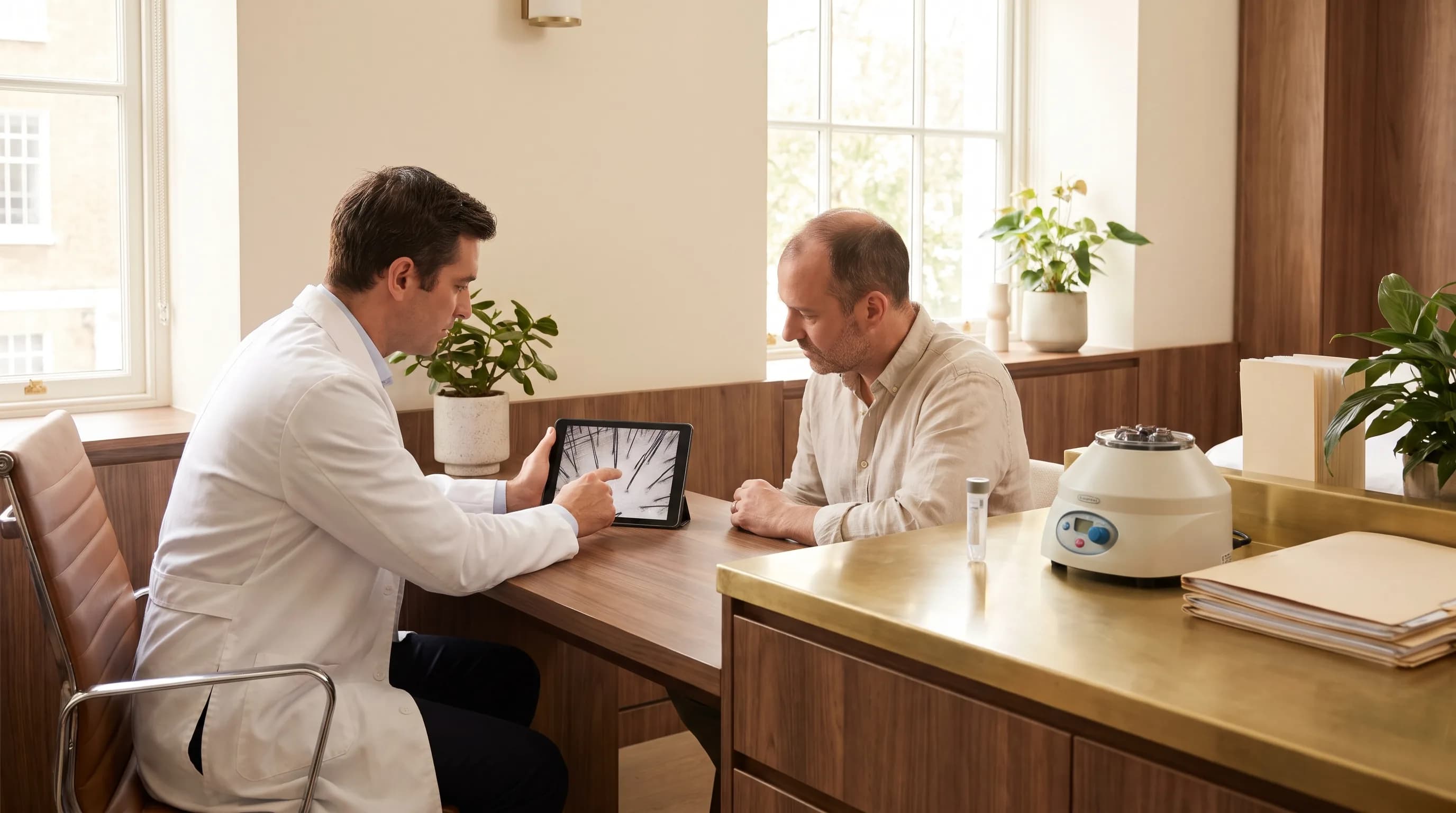
- Consultation. The doctor examines your scalp, asks about your hair history and health, and explains what exosome treatment can and cannot do.
- Product explanation. The doctor names the product, its source and its details.
- Scalp preparation. The scalp is cleaned, and numbing cream may be applied for comfort, depending on the doctor's advice.
- Treatment. The product is used on the thinning areas by the method the doctor has explained.
- Aftercare. You receive clear instructions on washing your hair, sun exposure and activity before you leave.
Most people go home straight after the appointment. Your doctor will confirm the time to allow when you book.
Does it hurt, and what is the downtime?
Comfort differs from person to person. Where microneedling or injections are used, most people describe light pricking or stinging, and the scalp can feel tender for a day or two. Redness, mild swelling or tiny marks can appear and usually settle within a few days. Most people return to work the same day, and your doctor gives advice that fits your own session.
How many sessions will I need, and how long do results take?
There is no single schedule that all doctors follow. The JPRAS Open review shows one patient treated with five sessions three weeks apart. That is a single illustrated example, not a standard plan, and it is not evidence of what to expect. For this reason, Medilife Wellness Clinic does not promise a fixed number of sessions. Your doctor sets a plan after assessing you and reviews it as your hair responds.
Hair grows slowly, and changes tend to be gradual. Some people notice less shedding first, and changes in density come later. Others notice little change. A sensible approach is to agree review points with your doctor, compare photographs taken in the same lighting and decide together whether to continue, adjust or stop.
What are the possible side effects and risks?
The JPRAS Open review states that minimal adverse effects were reported in systematic reviews and case series. The FDA notification, however, describes serious adverse events in patients treated with unapproved products, which is why the source and quality of the product matter. Long-term safety data are limited.
Redness, swelling, tenderness and itching of the scalp are possible after scalp treatments, and any procedure that breaks the skin carries a risk of infection, allergic reaction and bruising. Contact the clinic if you notice increasing pain, spreading redness, fever, discharge, marked swelling or any sign of an allergic reaction after your session.
How is exosome hair treatment different from PRP, PRF, mesotherapy and laser?
All of these are non-surgical hair treatments, but they work differently. Exosomes are made in a laboratory. PRP and PRF are prepared from your own blood, and mesotherapy places a mix of ingredients into the scalp.
 PRP: read PRP Hair Treatment in Dubai.
 PRF: read PRF Hair Treatment in Dubai.
 Mesotherapy: read Hair Mesotherapy in Dubai.
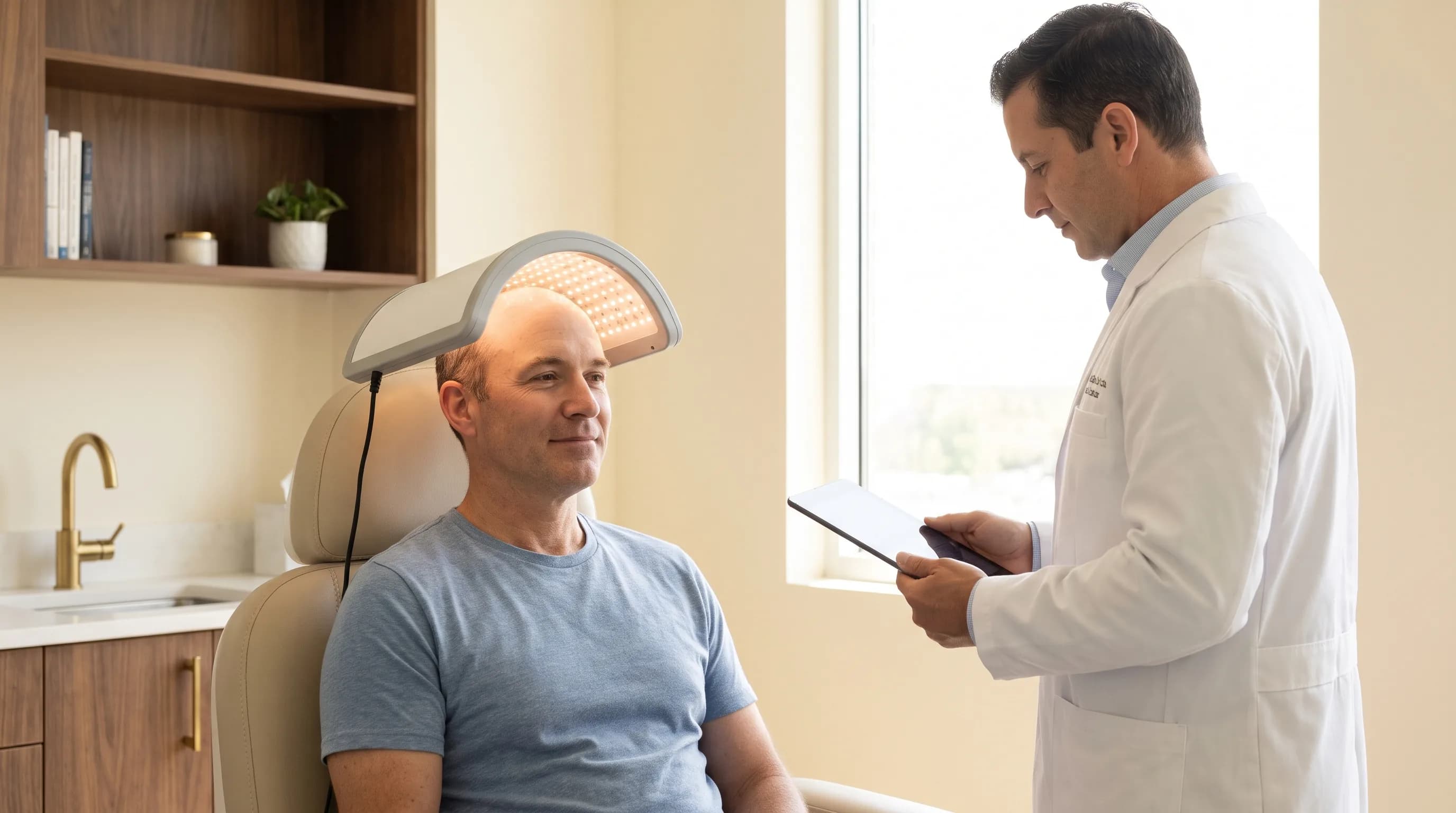 Low-level laser light: read Laser Hair Growth Therapy in Dubai.
No treatment in this group has been shown to be best for every person, and some people have more than one in a plan.
Exosomes are also used for facial skin and in wider longevity care.
Those are separate treatments with their own pages:
 Exosome Facial in Dubai
How much does exosome hair treatment cost in Dubai?
Price guide: from about AED 2,000 per session.
These prices are a guide to what treatment usually costs in Dubai. Medilife Wellness Clinic prices depend on your treatment plan; send us a WhatsApp message for current prices.
The cost depends on the product and brand, the method used, the area treated, the number of sessions and whether other treatments are added to your plan. The doctor confirms the cost at your consultation before any treatment begins.
Who performs exosome hair treatment at Medilife Wellness Clinic?
Your hair plan at Medilife Wellness Clinic is led by a doctor. The doctor examines your scalp, reviews your history, explains the product and carries out or supervises the procedure in line with the clinic's protocols. Treatment takes place in a clinical setting in XL Tower, Business Bay.
Why choose Medilife Wellness Clinic for exosome hair treatment?
- A cause before a treatment. Thinning hair has many causes. The doctor looks for the cause first and suggests exosomes only where they fit.
- The product explained. You are told the name, source and details of the product before treatment.
- Clear information about evidence. You hear what is known, what is not known and that results vary from person to person.
- More than one option in one clinic. Exosomes sit alongside other non-surgical hair treatments, so your plan can change as your hair responds.
- Open 24/7 in Business Bay. The clinic in XL Tower is open at any hour, which makes it easier to fit appointments around work and travel.
Frequently Asked Questions
How much does exosome hair treatment cost in Dubai?
Price guide: from about AED 2,000 per session. These prices are a guide to what treatment usually costs in Dubai. Medilife Wellness Clinic prices depend on your treatment plan; send us a WhatsApp message for current prices.
Is exosome treatment good for hair?
It may help some people. Reviews describe the clinical data as limited and preliminary, with promising signs in density and thickness, and larger randomised trials are still needed. Results vary from person to person.
Is exosome better than PRP for hair?
Neither has been shown to be better for everyone. Exosomes are made in a laboratory, and PRP uses plasma from your own blood. Your doctor helps you choose after examining your scalp. See PRP Hair Treatment in Dubai for PRP.
Which exosome is best for hair?
The sources we reviewed do not rank exosome products. They differ in source, purity and dose, so ask which product is used, where it comes from and whether it is registered for use in the UAE.
Is exosome hair treatment safe?
Reviews report minimal adverse effects in the studies they cover, and long-term data are limited. The US FDA has warned about serious harm from unapproved exosome products, so the product source matters. Your doctor explains the product used before treatment.
How long do exosome hair results last?
There is no reliable evidence on how long results last, because the clinical data are early and varied. Your doctor reviews your progress and advises on any follow-up.
How many exosome sessions are needed?
There is no single accepted schedule. Your doctor sets a plan after assessing you and reviews it as your hair responds.
Does exosome hair treatment hurt?
Most people feel light pricking or stinging where microneedling or injections are used, and numbing cream may be used. The scalp can feel tender for a day or two afterwards.
Can exosomes regrow hair in bald areas?
It is less likely to help in areas that have been bald for many years, because the follicles there may no longer be active. A doctor can examine the area and advise.
Visit Us in Business Bay
Medilife Wellness Clinic is in XL Tower, Business Bay, Dubai, and is open 24/7. To ask about exosome hair treatment or to book a consultation, call or send a WhatsApp message to +971 58 667 0702. For other options, see Hair Loss Treatment in Dubai.