Non-ablative
swelling or colour changes usually last only a few hours, and most people return to normal activities straight away.
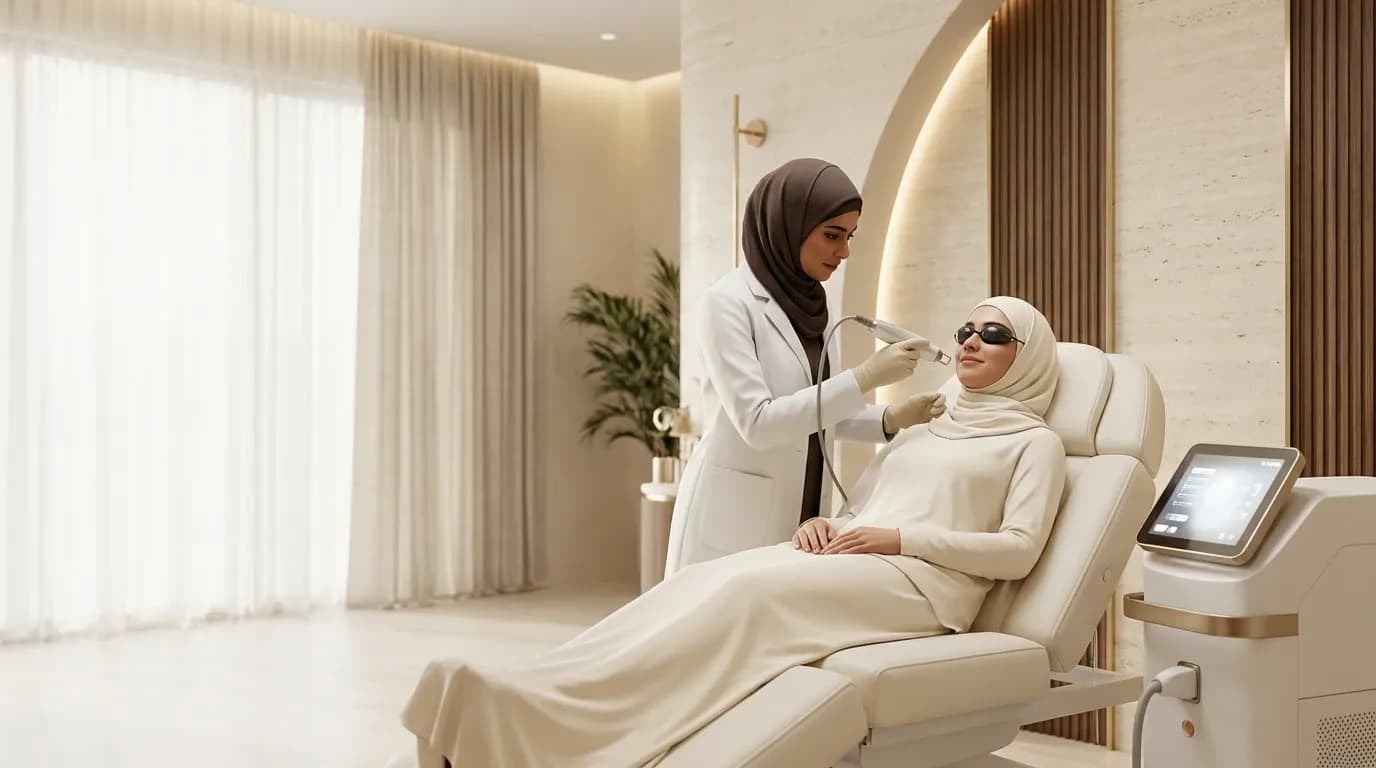
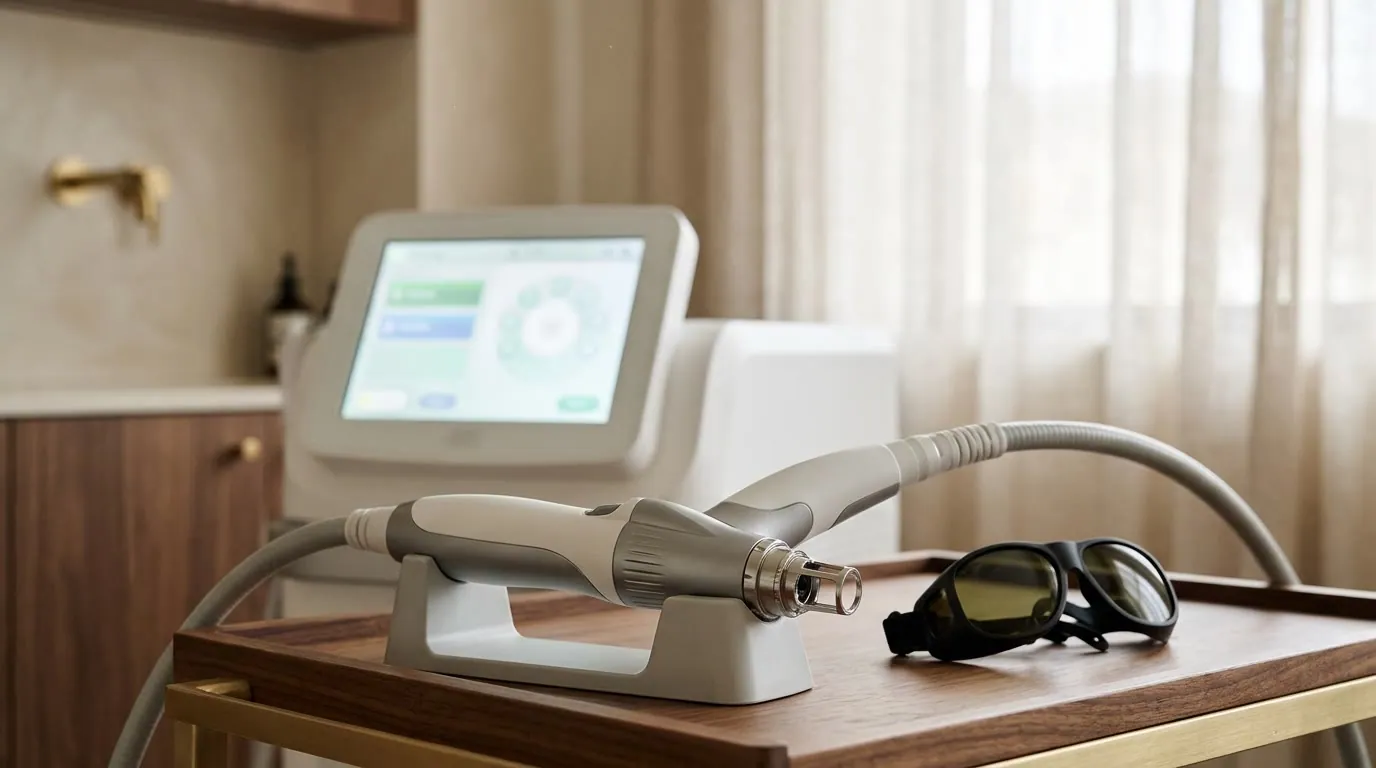
Laser skin resurfacing is a procedure that uses an energy-based device to refine the look and feel of the skin, mainly on the face. According to Mayo Clinic, it can soften fine lines, age spots and uneven skin tone, but it does not tighten loose skin.
The laser treats the skin in a controlled way, either by removing the outer layer or by heating the layer beneath it. The skin then repairs itself and builds new collagen.
Laser resurfacing falls into three groups, and the doctor chooses between them based on your skin, your concern and how much recovery time you can plan for.
Ablative lasers remove the outer layer of skin and heat the layer beneath it to boost collagen. Mayo Clinic lists carbon dioxide (CO2) and erbium lasers as examples. They give the strongest results and need the longest recovery. Fractional treatment works on microscopic columns of skin and leaves the tissue between them intact, which, according to Mayo Clinic, shortens recovery and lowers the risk of side effects.
Non-ablative lasers leave the skin surface intact and stimulate collagen in the layer below. They are gentler, with a much shorter recovery, and their results build gradually and are more subtle. They suit people who want a lighter improvement in texture and tone.
Laser skin resurfacing is used for fine lines and wrinkles, age spots, sun damage, uneven skin tone and texture, and mild to moderate acne scars. Cleveland Clinic also lists chickenpox and surgical scars. See our Acne Scars Treatment in Dubai page.
Laser resurfacing has limits:
Laser skin resurfacing suits adults with texture, fine lines, sun damage or scars who accept some recovery time. The doctor checks your skin type, medical history and recent sun exposure at the consultation, and it is the doctor who decides whether resurfacing is right for you.
Mayo Clinic notes that people with brown or black skin carry a higher risk of lasting changes in skin colour, and that heavy sun exposure in the two months before treatment can cause colour changes too. Darker skin tones and tanned skin need careful laser choice, gentler settings or a delay until the tan fades.
Mayo Clinic lists these situations as a reason for caution or for avoiding laser resurfacing: Tell the doctor about every medicine you take and about any skin conditions before treatment. Isotretinoin taken in the past year. A history of keloid scars, prior laser resurfacing or facial radiation. Connective tissue, autoimmune or weakened immune conditions. Cold sores or a recent herpes infection (an antiviral medicine may be needed). Pregnancy or breastfeeding.
The number of sessions depends on the laser type. Mayo Clinic states that ablative treatment often needs only one session, unless it is fractional, while non-ablative and fractional Er:YAG treatments usually need 2 to 4 sessions spaced over weeks or months.
Your own plan depends on your concern, your skin and the depth of treatment. The doctor explains the likely number of sessions and the gap between them at your consultation, and adjusts the plan as your skin responds.
Results build over time, as the skin keeps remodelling collagen for several months.
Recovery depends on how deep the treatment goes.
swelling or colour changes usually last only a few hours, and most people return to normal activities straight away.
milder than full ablative treatment, with healing that Cleveland Clinic puts at about a week.
swelling, itching and redness come first. New skin typically forms in 7 to 10 days, and full recovery takes at least a month, according to Mayo Clinic. Cleveland Clinic gives an overall healing time of about 5 to 21 days, with redness that can take months to fade.
Daily sunscreen and moisturiser are essential during recovery and afterwards. The clinic gives you written aftercare that fits your treatment.
Laser skin resurfacing cost in Dubai depends on the laser, the area, the number of sessions and the clinic. The table below is a price guide per session.
Clinics also sell packages of 3 to 6 sessions at a lower price per session. Prices differ widely for four reasons: the laser type, the size of the area, the number of sessions, and what the price includes, such as numbing cream, aftercare products or a consultation fee. Medilife Wellness Clinic prices depend on your treatment plan, which is set after the consultation. Send us a WhatsApp message for current prices.
Medilife Wellness Clinic does not publish a fixed discount on this page. Current offers and package prices are confirmed by WhatsApp or phone, so the price you are quoted is the current one.
Check these points before comparing offers from any clinic:
Ask for these in writing before booking.
Laser resurfacing works with light energy, while the other options work in different ways. The right choice depends on your concern and how much recovery you can plan for.
Laser resurfacing is often chosen for deeper texture, sun damage and acne scars, and the doctor can combine treatments in one plan.
Consultation
the team reviews your skin, medical history, medicines, sun habits and goals, and explains the laser type, the risks and the number of sessions.
Preparation
the skin is cleansed and a numbing cream is applied. The doctor decides what numbing or comfort measures your treatment needs.
Treatment
the laser is passed over the area. The sensation varies by laser type and area. Protective eyewear is worn throughout.
Aftercare
the skin is cooled and protected, and the team explains how to care for it and when to book your next visit.
A partial-face session takes about 30 to 45 minutes, and a full-face session can take up to 2 hours, according to Cleveland Clinic.
Laser skin resurfacing is a well-known procedure, but it carries risks. Mayo Clinic lists swelling, itching, burning and inflamed-looking skin as common effects, and after ablative treatment the inflammation can last several months.
Other risks include:
A skin assessment, the right laser settings and careful aftercare lower these risks. Results and side effects vary from person to person.
Laser skin resurfacing at Medilife Wellness Clinic is performed by the clinic's trained specialists, under DHA-licensed doctors. The doctors review your skin and medical history at the consultation, and set the plan.
Our General Practitioners include Dr. Mauada Siddig, with more than 10 years of experience, and Dr. Marina Girgis, with 7 years of experience.
a consultation with a DHA-licensed doctor comes before treatment starts.
ablative, non-ablative and fractional options, so the treatment matches your skin and your recovery time.
you receive your plan and price after the consultation.
book at any hour of the day or night.
XL Tower, Business Bay.
Laser skin resurfacing can improve texture, fine lines, age spots and mild to moderate acne scars, as Mayo Clinic explains. It carries risks and needs recovery time, so the doctor checks that it suits your skin first.
Mayo Clinic states that ablative results can last for years, while non-ablative results build gradually. Normal ageing and sun exposure continue afterwards, and some people have maintenance sessions. Results vary from person to person.
The downsides are recovery time, redness and swelling, and the risk of colour changes, infection, milia and scarring. Ablative treatment has the longest recovery and the highest risk of side effects.
Laser can reduce existing pigmentation such as age spots, but it does not stop new pigmentation forming. Daily sunscreen is needed to protect the results, and people with melasma need a tailored plan from the doctor.
They do different jobs. Laser resurfacing improves skin texture and tone but does not tighten loose skin, according to Mayo Clinic, while a facelift is a surgical procedure for sagging skin. The doctor advises which suits your concern.
Prices usually start from about AED 600 for a small area, and a full face usually costs about AED 2,000 to AED 3,500. Medilife Wellness Clinic prices depend on your treatment plan; send us a WhatsApp message for current prices.
Laser resurfacing uses light energy to remove or heat the skin layers, while microneedling uses tiny needles to prompt collagen. Laser is often chosen for deeper texture and acne scars, and microneedling for lighter concerns with less downtime.
Book a consultation at Medilife Wellness Clinic, XL Tower, Business Bay, by WhatsApp or phone at +971 58 667 0702. The clinic is open 24 hours, 7 days a week. For all of our laser treatments, see our Laser Clinic in Dubai page.

