01How accurate is bioelectrical impedance?
It is a good tool for tracking change, but not a perfect one. The PLoS One review notes that regression-based estimates carried standard errors of about 3% to 8% for total body water and 3% to 6% for fat-free mass, which the authors judged too large for clinical use, and that accuracy depends on assumptions about hydration that are often not met. Hydration, recent meals and recent exercise can all shift a reading. For this reason the clinic asks you to prepare in the same way before each scan, and the doctor looks at the trend, not a single figure.
02How does it compare with a DEXA scan?
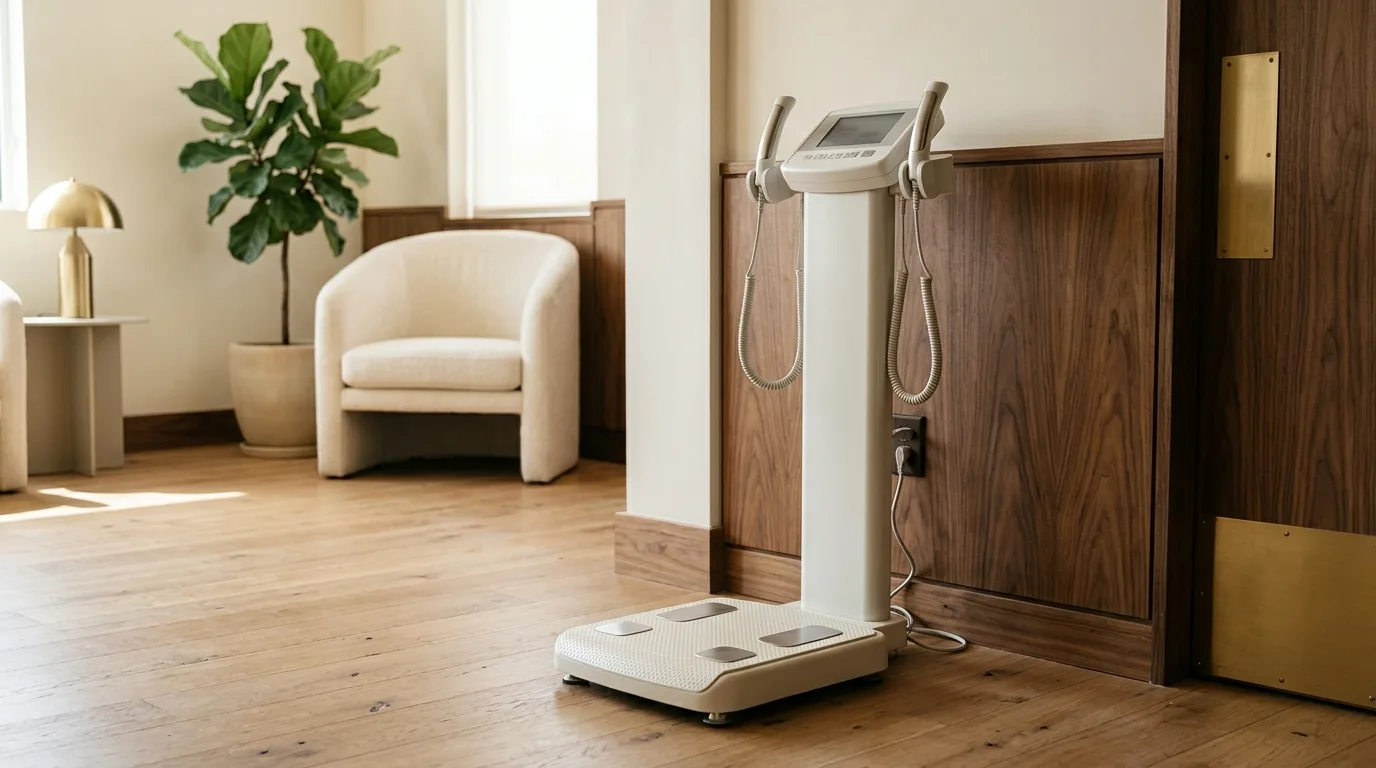
DEXA is an X-ray based scan that the CDC describes as a precise measure of body composition, but it also says DEXA is expensive and not widely available. Impedance scanning is quicker, needs no radiation and suits repeat checks during a programme. The clinic scan uses bioelectrical impedance, and the doctor refers you to a radiology centre when bone density or a very detailed breakdown is needed.
03Who benefits from a body composition scan?
People starting a weight loss programme or medication, people who train and want to track muscle, people whose weight looks normal but who carry a lot of fat, and people recovering after illness who want to follow muscle mass. The doctor may also use the result alongside blood tests for blood sugar, cholesterol and thyroid. See Weight Loss Injections in Dubai and Obesity & Metabolic Panel in Dubai.
04How should I prepare for the scan?
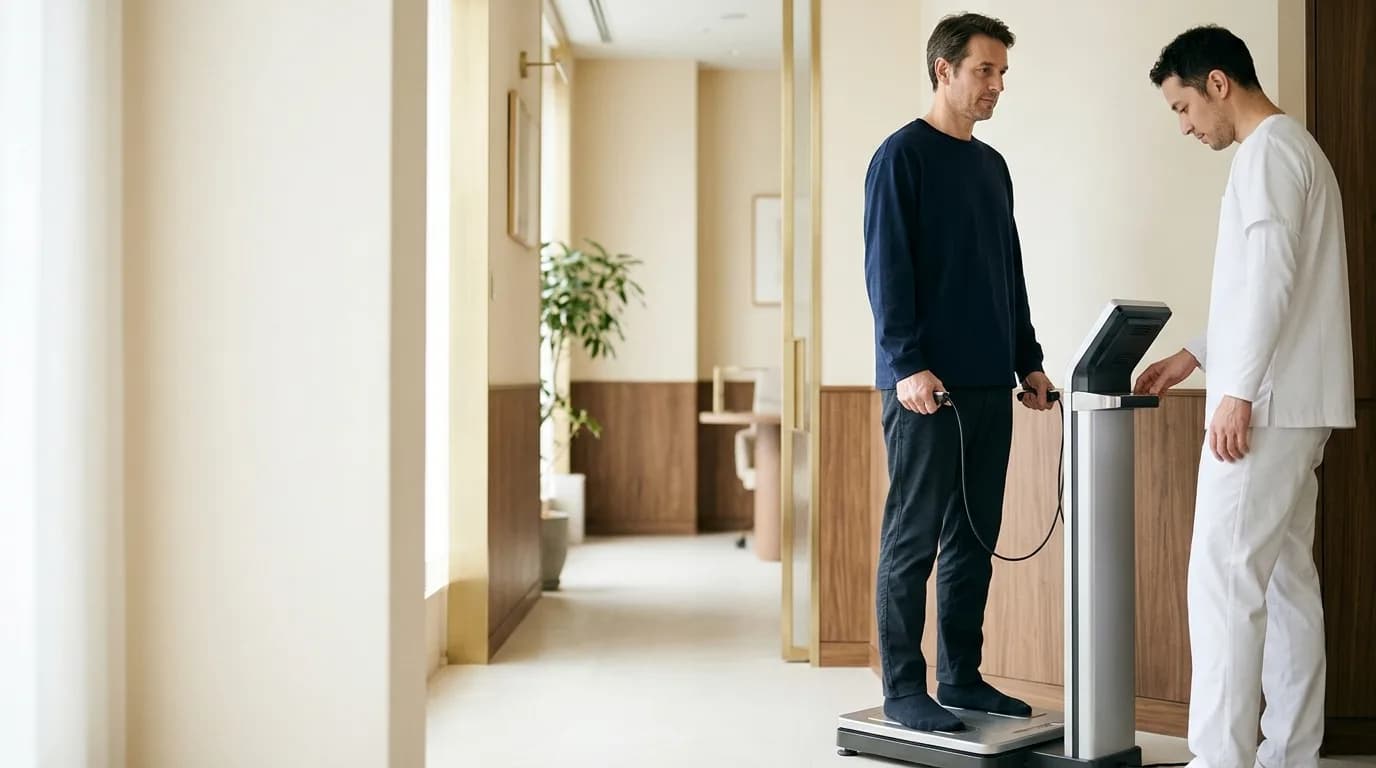
The team gives exact instructions at booking, because the device and the clinic's protocol decide the details. In general, keep your eating, drinking and exercise the same before each scan so readings can be compared, wear light clothing, and remove metal items if asked. The PLoS One review stresses controlling fluid intake and the time since food or drink before measuring. Tell the nurse about any implanted medical device or pregnancy before the scan.