Conditions
Melasma Causes and Triggers in the UAE Sun: Sun, Hormones and Skin Type
Melasma causes and triggers: sun and visible light, hormones, pregnancy, contraceptives, genetics and skin type, as stated by the AAD and DermNet.
In this article
- Quick Answer: Melasma Causes and Triggers at a Glance
- What causes melasma?
- What is the difference between a cause and a trigger?
- Does sun cause melasma?
- Does visible light or heat make melasma worse?
- Do hormones, pregnancy and contraceptives cause melasma?
- Is melasma genetic, and does skin type matter?
- Can cosmetics and medicines trigger melasma?
- Is melasma common in the UAE?
- How does sun protection fit in?
- How is melasma diagnosed?
- How does Medilife Wellness Clinic assess melasma?
- Frequently Asked Questions
- Sources
By Medilife Wellness Clinic. Medically reviewed by Dr Marina Girgis (DHA licence 71970809-004) and Dr Mauada Siddiq (DHA licence 88142075-001), General Practitioners
The exact cause of melasma is not fully understood, says the American Academy of Dermatology (AAD). Sunlight and female hormones are the main triggers named by the AAD, DermNet and Cleveland Clinic. Family history and medium to dark skin tones raise the likelihood. A doctor confirms the diagnosis.
Quick Answer: Melasma Causes and Triggers at a Glance
- Cause: not fully known, says the AAD. Melanocytes, the cells that make pigment, tend to be more active in people with melasma.
- Sun: ultraviolet (UV) and visible light promote melanin production, says DermNet. Cleveland Clinic adds infrared radiation.
- Hormones: pregnancy and oral contraceptives are the best-documented triggers, say the AAD and DermNet.
- Risk factors: female sex, ages 20 to 40, family history and medium to dark skin tones.
- Diagnosis: a doctor examines the skin, as melasma can be mistaken for other conditions, says the AAD.
What causes melasma?
Nobody knows the full cause of melasma. The AAD says more research is needed and that melanocytes tend to be more active in people with melasma, for reasons not well understood. DermNet calls the cause complex and says melasma has been proposed to be a photoageing disorder in genetically predisposed people.
A 2023 review in Clinical, Cosmetic and Investigational Dermatology (Liu and colleagues) concludes that melasma may be a multifactorial pigmentation disease affecting genetically susceptible individuals.
What is the difference between a cause and a trigger?
A cause is what makes someone prone to melasma, while a trigger is what brings patches on or makes them darker. The sources do not use this split formally, so this guide groups them as stated: genetics, skin type, sex and age make up the background risk. Sun, hormones and some products are the triggers named.
Does sun cause melasma?
Sun is the best-documented trigger. The 2023 review says sun exposure is the most important environmental factor implicated in melasma. The AAD says sunlight prompts the body to make more melanin, which fits patches appearing on the face, neck and arms. MedlinePlus says being in the sun makes melasma more likely and that it is more common in tropical climates.
Does visible light or heat make melasma worse?
Visible light is involved, according to DermNet and the 2023 review. DermNet says ultraviolet and visible light promote melanin production. The review describes blue-violet light causing pigmentation in a dose-dependent way. Cleveland Clinic says ultraviolet and infrared radiation from the sun are key in making melasma worse, and it describes infrared as heat.
Cleveland Clinic also lists LED screens as a possible cause. The 2023 review cites one study in which short-term exposure to screen blue light did not worsen melasma, so the evidence on screens is mixed. DermNet and the AAD do not discuss heat as a trigger.
Do hormones, pregnancy and contraceptives cause melasma?
Hormones play a role in some people. The AAD says rising oestrogen and progesterone in pregnancy are thought to trigger it, and that birth control pills may trigger it. DermNet names pregnancy and oral contraceptives containing oestrogen and progesterone, and says they are implicated in one quarter of affected women. It also lists intrauterine devices, implants and hormone replacement therapy.
The 2023 review says 8 to 34% of women taking oral contraceptives or hormone replacement therapy develop melasma. Cleveland Clinic says the reason pregnancy triggers it is unclear and that the colour usually fades after pregnancy. MedlinePlus says it may come back in future pregnancies.
Is melasma genetic, and does skin type matter?
Yes to both, as the sources state. The table sets out the findings.
Can cosmetics and medicines trigger melasma?
Some can. DermNet says perfumed soaps, toiletries and cosmetics may cause a phototoxic reaction that leads to melasma. Cleveland Clinic says irritating skin care products, makeup and some scented soaps can make it worse. The AAD lists anti-seizure medicines and medicines that make skin more sensitive to sunlight, and it calls stress a controversial trigger. It also says tanning beds produce stronger UV rays than sunlight.
Is melasma common in the UAE?
No UAE prevalence figure is quoted here, because no reliable local source was read. The 2023 review lists Middle Eastern populations among groups with higher prevalence, but gives no country-level data. This guide therefore makes no claim about how common melasma is in Dubai.
How does sun protection fit in?
Daily sun protection is advised by every source that covers it. The AAD says to use sunscreen every day and wear a wide-brimmed hat, and that treatment needs daily protection to work. DermNet advises year-round, life-long protection with a broad-spectrum sunscreen containing iron oxides. Cleveland Clinic also names iron oxides and adds a wide-brimmed hat. MedlinePlus advises avoiding midday sun and notes that sun exposure is stronger near water, sand and concrete.
How is melasma diagnosed?
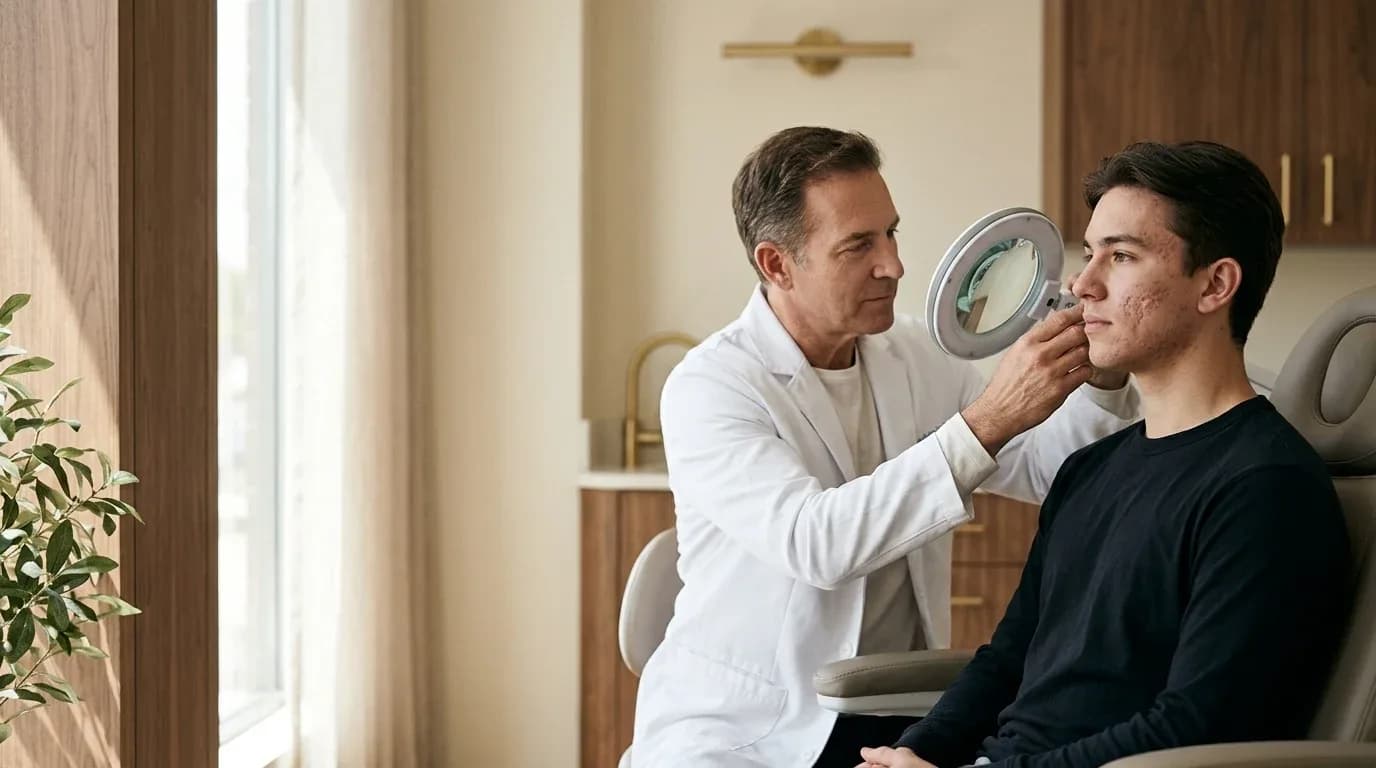
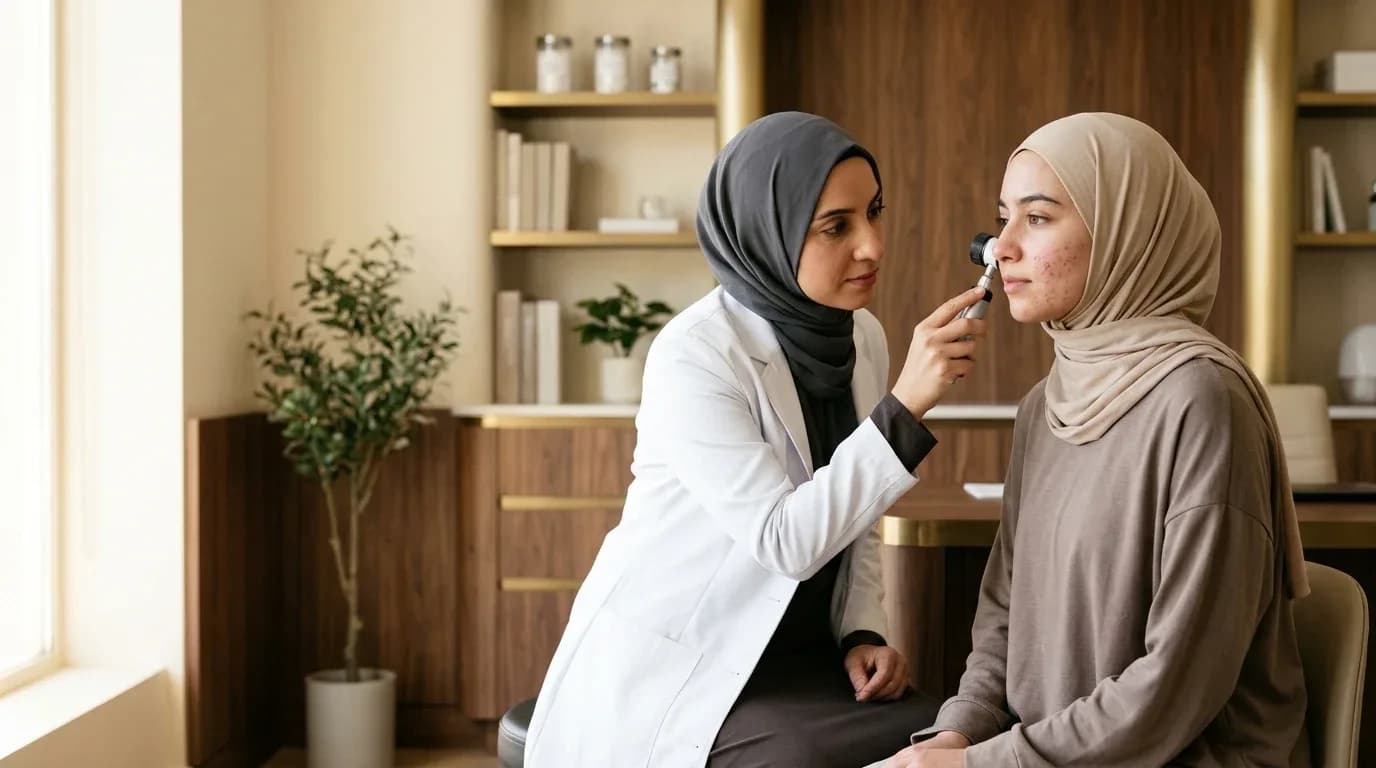
A doctor diagnoses melasma by examining the skin. The AAD says it can be mistaken for another skin condition and that a dermatologist can tell which one it is. MedlinePlus says a provider looks at the skin, and a Wood's lamp may guide treatment. Cleveland Clinic says a biopsy may be used.
How does Medilife Wellness Clinic assess melasma?
At Medilife Wellness Clinic in XL Tower, Business Bay, a doctor examines your skin, asks about pregnancy, contraceptives, medicines and products, and confirms the diagnosis. The clinic is open 24 hours a day, 7 days a week. For treatment details, see Melasma Treatment in Dubai.
Frequently Asked Questions
Is melasma caused by hormones?
Partly, in some people. The AAD says hormones seem to play a role, and pregnancy and birth control pills are the best-documented hormonal triggers.
Can men get melasma?
Yes, though less often. The AAD says it is more common in women than men.
Is melasma contagious or cancer?
No. The AAD says it is not contagious and not a sign of skin cancer.
Does melasma look worse in summer?
Often. The AAD says patches often look darker in summer and lighter in winter. Cleveland Clinic says the same.
Sources
- American Academy of Dermatology. Melasma: Causes (last updated 15 February 2022). https://www.aad.org/public/diseases/a-z/melasma-causes
- American Academy of Dermatology. Melasma: Overview (last updated 15 February 2022). https://www.aad.org/public/diseases/a-z/melasma-overview
- DermNet. Melasma (last modified 16 December 2025). https://dermnetnz.org/topics/melasma
- Cleveland Clinic. Melasma (last updated 27 July 2020). https://my.clevelandclinic.org/health/diseases/21454-melasma
- MedlinePlus, National Library of Medicine. Melasma (review date 13 October 2024). https://medlineplus.gov/ency/article/000836.htm
- Liu W, Chen Q, Xia Y. New Mechanistic Insights of Melasma. Clinical, Cosmetic and Investigational Dermatology 2023;16:429-442. https://pmc.ncbi.nlm.nih.gov/articles/PMC9936885/