Conditions
Types of Acne Scars: Ice Pick, Boxcar, Rolling, Raised and Colour Marks
Types of acne scars: ice pick, boxcar, rolling, raised scars and colour marks. See how each looks, which are not true scars and how doctors treat them.

In this article
- Quick Answer: Acne Scar Types at a Glance
- What are the types of acne scars?
- What are ice pick, boxcar and rolling scars?
- What are raised acne scars?
- Are red and brown marks after acne scars?
- What causes acne scars?
- How are acne scars treated?
- When should you see a doctor about acne scars?
- How does Medilife Wellness Clinic assess acne scars?
- Frequently Asked Questions
- Sources
By Medilife Wellness Clinic. Medically reviewed by the Medilife Wellness Clinic medical team.
Acne scars fall into 2 main groups: atrophic scars, which are depressed, and raised scars. Atrophic scars are the majority, says DermNet, and include ice pick, boxcar and rolling types. Flat red or brown marks after acne are usually not scars, says the American Academy of Dermatology (AAD).
Quick Answer: Acne Scar Types at a Glance
- Ice pick: narrow, deep, V-shaped, and the most common atrophic type at 60 to 70%, says DermNet.
- Boxcar: wide round or oval dips with sharp edges.
- Rolling: wide dips with sloping edges.
- Raised: hypertrophic scars stay within the original spot, and keloids grow beyond it.
- Colour marks: flat red or brown marks that usually fade, says the AAD.
- Permanence: acne scars are usually permanent but can improve, says DermNet.
What are the types of acne scars?
There are 5 types of acne scar marks, and the table separates true scars from colour changes. DermNet, reviewed by a dermatologist in August 2023, gives the descriptions.
The NHS names ice pick and boxcar scars as shallow holes left by spots. DermNet lists perifollicular elastolysis as a further atrophic type: small pale marks 2 to 4 mm wide, most common on the back and chest.
What are ice pick, boxcar and rolling scars?
They are 3 depressed scar types that differ in width and depth. Ice pick scars are narrow and deep, and DermNet says they make up 60 to 70% of atrophic scars. Boxcar scars are wider, with defined edges. Rolling scars are wide with a sloping edge, giving an uneven surface. Atrophic scars form when skin tissue is lost during healing, says DermNet.
What are raised acne scars?
Raised acne scars are hypertrophic scars and keloids. DermNet says hypertrophic scars match the size of the original spot, and keloids are often larger. Both occur more often on the jawline, chest and upper back. Mayo Clinic says people with darker skin are more likely to get keloids and pitted scars, which can last long term. DermNet says keloid scars can keep evolving over time.
Are red and brown marks after acne scars?
No. Flat red or brown marks are usually not scars. The AAD says a flat spot of colour when acne clears is usually post-inflammatory hyperpigmentation, and it usually fades. DermNet groups these marks as skin colour changes, separate from scar types. Redness is more common in lighter skin and brown marks in darker skin, says DermNet, and they often improve over months or longer.
What causes acne scars?
Acne scars form when inflamed spots damage the skin. The AAD lists 3 risk factors: deep, painful acne, a close blood relative with acne scars, and picking, popping or squeezing spots. DermNet adds that moderate-to-severe acne scars more often, and that smoking is linked to more severe scarring. Mayo Clinic says the earlier acne treatment starts, the lower the risk of scarring.
How are acne scars treated?
Doctors match the treatment to the scar type, and no source gives session counts. DermNet lists 3 approaches for depressed scars:
- Resurfacing: chemical peels, dermabrasion, laser resurfacing and skin needling, with multiple treatments often used
- Lifting: dermal fillers and subcision
- Excision: punch or elliptical excision and punch grafting for prominent, deep scars
DermNet lists steroid treatments, silicone gel or sheeting, pulsed dye laser and surgical revision for raised scars, and says they recur easily. DermNet says active acne is treated before scars. The AAD says scars rarely go away completely on their own.
When should you see a doctor about acne scars?
See a doctor when scars bother you or when acne is still active. The NHS advises seeing a GP when spots are deep, painful or causing scars, and says a GP may refer you to a dermatologist. A doctor identifies the scar type, because the type decides the treatment.
How does Medilife Wellness Clinic assess acne scars?
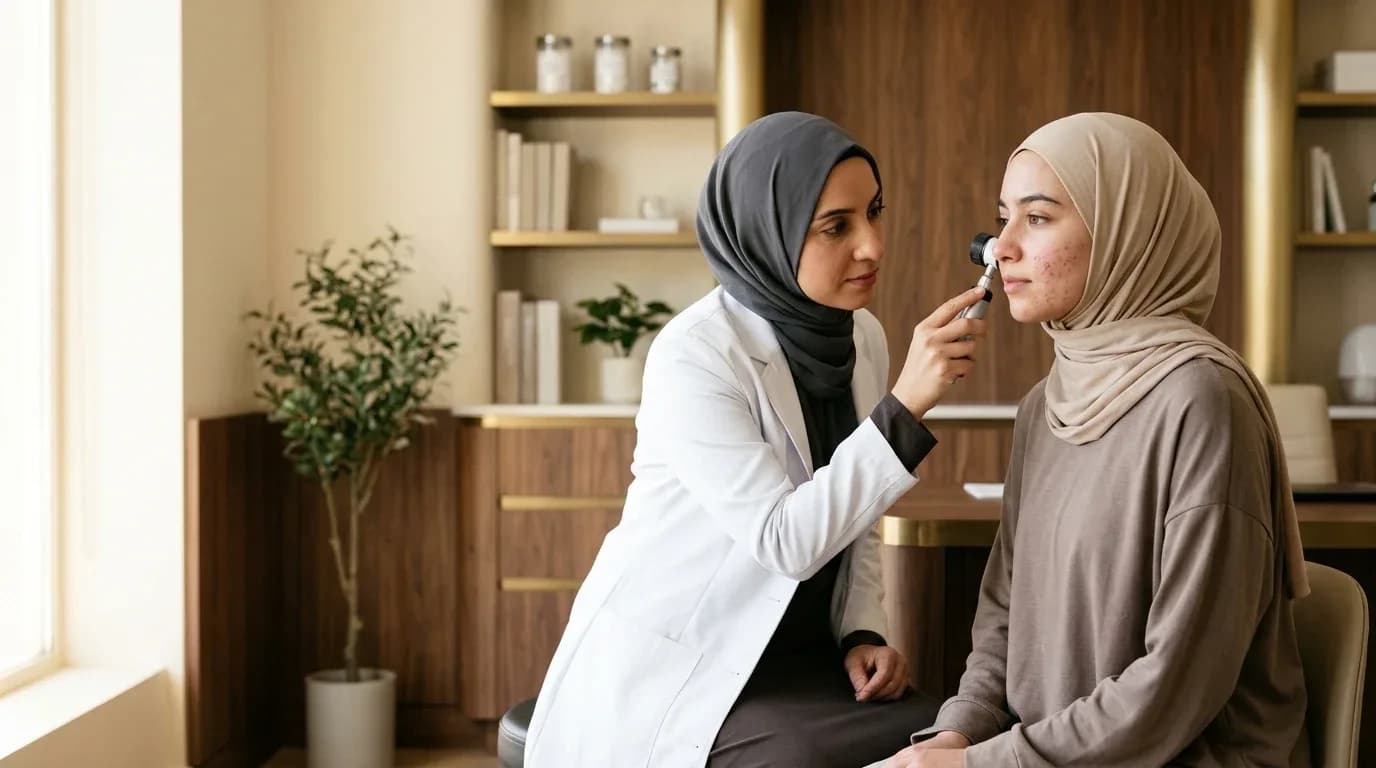
At Medilife Wellness Clinic in XL Tower, Business Bay, a doctor examines your skin, identifies the scar type and agrees a plan with you. The clinic is open 24 hours a day, 7 days a week. For treatment details, see Acne Scars Treatment in Dubai.
Frequently Asked Questions
Which acne scar type is the most common?
Ice pick scars are the most common atrophic type at 60 to 70%, says DermNet.
Can acne scars be removed completely?
Rarely. The AAD says scars rarely go away completely on their own, and DermNet says they are usually permanent but may improve with treatment.
Does picking spots cause scars?
Yes. The AAD lists picking, popping and squeezing as risk factors, and the NHS advises against it.
Do acne marks fade on their own?
Flat colour marks usually fade, says the AAD, and DermNet says this can take months or longer.
Sources
- DermNet. Acne scarring (last reviewed August 2023, Dr Ian Coulson). https://dermnetnz.org/topics/acne-scarring
- American Academy of Dermatology. Acne scars (last updated 8 December 2023). https://www.aad.org/public/diseases/acne/derm-treat/scars
- NHS. Acne (last reviewed 22 September 2026). https://www.nhs.uk/conditions/acne/
- Mayo Clinic. Acne: Symptoms and causes (20 July 2024). https://www.mayoclinic.org/diseases-conditions/acne/symptoms-causes/syc-20368047